


In looking for something the other day I came across my thesis for my first Psychology Degree (graduated BSc Hons in Psychology from The University of Dundee) lovingly typed by my Mum, on a word processor, it looked superb. It really took me back to that time.
The Research
The title of my thesis was “The Influence of Adult Tutoring on Children’s Route Planning Strategies.” Now this might not sound like the most enthralling topic but bear with me – I do have a point.
One of my heroes of the time was a psychologist called Lev Vygotsky who described something called the Zone of Proximal Development.
He described the Zone as:
“the distance between the actual developmental level as determined by independent problem solving and the level of potential development as determined through problem solving under adult guidance, or in collaboration with more capable peers”
Or to put it another way – the difference between what a learner can do without help and what he or she can do with help.
My research involved working with children between 8 and 9 years old and their parents.
I divided the children into two groups. Both groups of children completed a final task (without any help from their parents) which involved planning a route around a basic map of a small village to drop their friends off after a party. They had to draw the route directly onto the map.
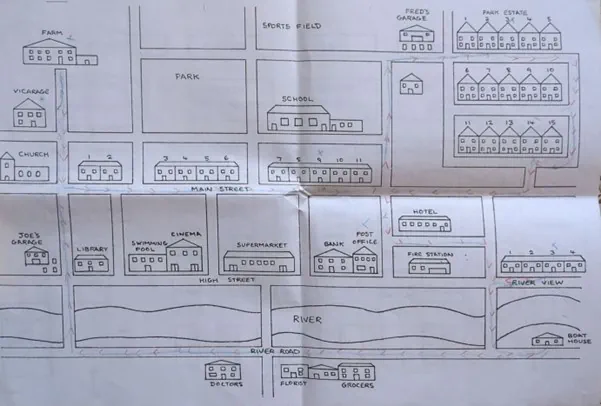
Before this final task they had worked on a task with their parents. Group 1 worked on a task where they had to plan a route around a supermarket to collect a list of products – this task was similar to the final task. Group 2 worked on a task with their parents which was unrelated to the final task. This involved sorting pictures of objects into different categories.
The Results
I found that the length of the route did not differ significantly between the groups. However – I found the number of pauses made during the final task was significantly greater for the children in Group 2. Group 1 used techniques which showed they had planned ahead, they had a greater number of one step moves and also marked the locations they had to visit on the map before they began.
So, the tutoring from their parents had caused them to develop new strategies which they used in the final task.
Vygotsky also found this effect when children worked and played with peers.
What does this mean for you in the workplace?
After you left full time education did you choose to engage in any further formal or informal learning to enhance your life and increase your effectiveness (e.g. driving lessons, tennis coaching, yoga lessons, a book group)? Or perhaps you shied away from opportunities?
I know it can be difficult to ask for help. It requires us to be vulnerable and perhaps be the beginner in the room.
And there are rewards to be had if we are prepared to exercise our curiosity.
I typically work with people who have directly requested help or have demonstrated curiosity in finding out about skills that could be helpful at work and in life. I consider myself to be that person, who can work with individuals and groups in that Zone of Proximal Development. To help them move towards their goals, without being hijacked by unhelpful mind chatter, in a way that has personal meaning.
What small step could you take today to place yourself in the Zone of Proximal Development?
A final shocker for me is that the children I worked with will now be around 44 years old – I wonder how good they are at route planning now?!