


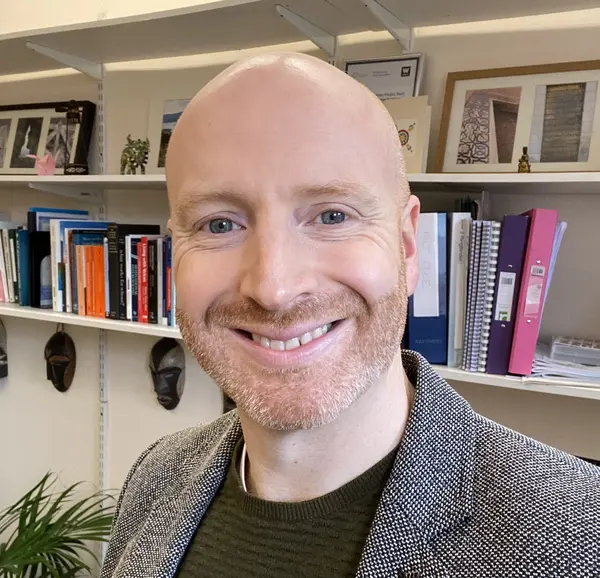
Ross joined me for a second time on the People Soup podcast to talk about his new book, “The Tree That Bends, How a flexible mind can help you thrive“. In the first part of our chat he talked about his personal values and his work in high performance environments and in the second part, we talked about his brilliant book. In a moment, I’ll hand over to Ross, who shares an extract from his book, bringing to life key concepts based upon ACT and psychological flexibility. To finish, I’ll share my review of Ross’ book.
Psychological Flexibility by Ross White
“Psychological flexibility is the ability to be present in the here-and-now and to tailor our behaviours to situational demands in service of doing what matters to us – even if difficult thoughts and emotions show up. It’s psychological flexibility that allows us to doubt but do! A range of self-report questionnaires have been developed to measure psychological flexibility (including the Psy-Flex, CompACT-10, MPFI, and AAQ-II), and specific neural pathways in the medial prefrontal cortex area of the brain have been implicated in flexibility. A review of research studies conducted with a range of populations including students, people with physical health problems, people seeking psychological support, and office workers, found that low levels of psychological flexibility are consistently associated with worse levels of wellbeing[iii] (defined as a measure of how we experience the quality of our own lives). Just as physical flexibility allows us to be supple and pliable to meet the demands of physical exertion, improving our range of motion and reducing the risk of injury, psychological flexibility (also referred to as developing a ‘flexible mind’) allows us to be agile in responding to our emotions, thoughts and sensations so that we can both perform and feel well.
We all like to think that we are flexible in how we respond to life’s ups and downs. But rigidity is the norm: we lose sight of what matters to us; we relate to difficult thoughts and emotions as things to be avoided, resisted or controlled; we get bound up in old routines that are no longer serving us; we get absorbed in our inner selves and miss important opportunities available in the world around us. A flexible mind challenges these attitudes.
We hear a lot about the importance of building better habits, and are told that better habits lead to better results. Many years of working with people operating in high-performance environments has taught me that this can certainly be the case; we can all use habits to fulfil our potential, whatever our chosen field might be. But choosing to slavishly stick to routines is not always a recipe for success. Habits should never usurp the purpose they are intended to serve; the tail ends up wagging the dog when they do. Habits, too, need to flex. A flexible mind allows us to optimize our choice of behaviours to the situations and challenges we face. Habits are blind – it’s flexibility that sees.
In my work with clients, I highlight that flexibility is about being AWEsome. Why? Because A.W.E. is the three-letter acronym I use to capture three key aspects of a flexible mind:
- ‘A’ stands for ‘Anchored’ – fully situated in time and place, and able to recognise that thoughts and emotions are momentary experiences that come and go.
- W stands for ‘Willing’ – able to accept their mind’s story-generating tendencies, and being prepared to turn towards rather than away from the emotions associated with those stories.
- E stands for ‘Empowered’ – able to act in accordance with their purpose and personal values.
The choices we are confronted with provide opportunities to exercise A.W.E. Will we choose willingness or reluctance, showing up or shutting down, being true and seeing it through or feeling scared and being deterred? It’s the A.W.E. of flexibility that helps us to choose to move towards what truly matters to us, rather than away from challenging emotions, thoughts and sensations. Flexibility is not merely the sum of its constituent parts – it is the multiplication of them. The ‘flexibility formula’ states that: Flexibility = Anchored × Willing × Empowered. Flexibility needs at least some of each of its three constituent parts to be present; the greater the amounts of each, the more flexible our mind will be.
Maybe you feel that your mind is sufficiently flexible already? Maybe you’re right – maybe you never get so preoccupied by your thoughts that you stop noticing what’s happening around you; maybe you never try to suppress or avoid challenging emotions that accompany those thoughts; maybe you never waver in your commitment to doing what it takes because of troubling thoughts and emotions. If that’s the case, bravo: you’re a tenth-dan black belt in the art of flexibility! If you’re a lesser mortal, however, then opportunities exist to build the A.W.E. of a more flexible mind. My new book Tree That Bends: How a Flexible Mind can help you thrive – from which this section of the newsletter has been extracted – will show you how.”
If you’d like to read more of Ross’ writing, I’d recommend signing up for his free monthly newsletter, 5 to Thrive, which combines 5 minutes of reading and 5 resources to help you thrive. You can sign up to the newsletter and check out previous issues here.
My review of The Tree That Bends by Professor Ross White
This review was first shared with Ross in our live podcast recording.
“Ross White, buckle up, because I’m going to say two things I’ve never said in a book review before. Firstly, it’s a right page turner, and secondly, it’s a masterpiece. Ross blends history, philosophy, films, sports, literature, business, client stories, research, theory, and his own personal experience to build a compelling rationale for cultivating a flexible mind, including really practical exercises.
His writing is captivating, particularly when he describes significant moments from his own life. This powerful role modeling allows us to appreciate Ross’s humanity and builds trust in him as our guide. And the title is far more than an illustrative metaphor. It’s integral to the book and you’ll also come away with insights into the secret world and magnificent adaptability of trees.
This book is so aligned with what I do in the workplace that I’ve already recommended it to two coaching clients. Bravo, Ross”
Applying the AWE Model to my Work
The processes of ACT are designed to cultivate psychological flexibility and if I apply Ross’ AWE Model to my work with individuals and teams, I’m always seek to facilitate:
- Awareness – of ourselves, our impact and our environment (ANCHORED)
- Adaptability – so we can flex to be the most authentic version of ourselves, in any given context, without unhelpful distractions from our inner world (WILLING)
- Authentic Action – an exploration and connection with our personal values. How often do we pause to think about how we would like to ‘show up’ in any situation in life and what we would like to role model for others? (EMPOWERED)
You can find out more about my work here.